Skip to content
CyberOpsSec
CyberOpsSec

Just another cybersecurity site

  • Home
  • Posts
  • Knowledge
    • Auditing
    • Linux Commands
    • Ports & Protocols
    • Scanning
    • Sniffing
    • Syslog
    • Vulnerability/Patch Mgmt
  • About
  • Contact
CyberOpsSec

Just another cybersecurity site

ICMP Timestamp Request Remote Date Disclosure

Admin, May 8, 2024August 11, 2025

You may have seen this vulnerability pop in Nessus. In order to remediate this we will need to block ICMP type 13 inbound to our boxes.

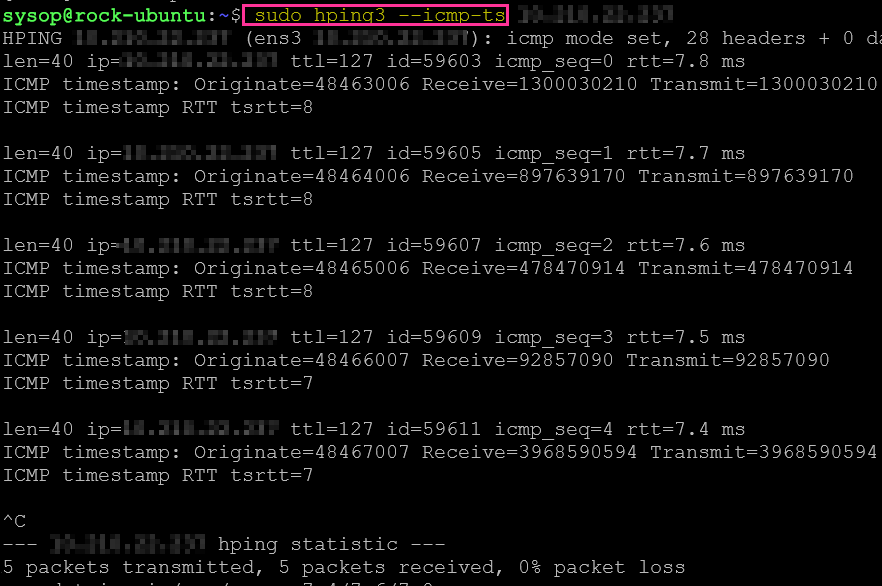
To test this we can use the hping3 tool. Hping3 documentation states you can test for this ICMP type with the –icmp-ts command. In the screen shot you can see the IP responding to Type 13 requests.
I will be creating a firewall rule in my EDR software (which controls the Windows firewall) to block this. This can be done with any host based firewall software.
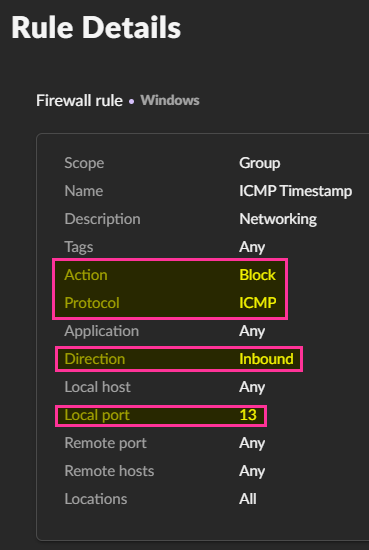
After the host based firewall rule has been set:

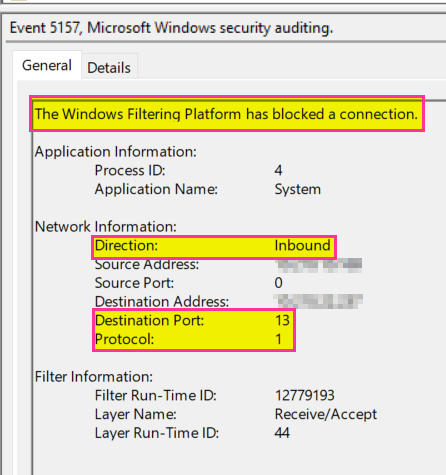
I have Windows auditing enabled for EventID 5157. We can now verify this is blocked.
Vulnerabilities

Post navigation

Previous post
Next post

Related Posts

Disable mDNS

March 13, 2024August 11, 2025

Issuing netstat and lsof commands to view UDP 5353 connections/listening ports shows that the avahi-daemon…

Read More

AD CS Vulnerabilities

January 11, 2024August 11, 2025

If an attacker gets domain user level permissions they could use tools such as certipy-ad…

Read More

Patch Mgmt – Windows Update Issues

November 6, 2025November 6, 2025

What if your patch management solution fails to install certain updates? The answer: WinRM and…

Read More

Recent Posts

  • Patch Mgmt – Windows Update Issues
  • MSSQL Auditing
  • BloodHound CE Setup
  • UBI – User Browsing Isolation
  • Rolling KRBTGT Account

Recent Comments

No comments to show.

Archives

  • November 2025
  • August 2025
  • June 2025
  • November 2024
  • September 2024
  • June 2024
  • May 2024
  • March 2024
  • January 2024
  • November 2023
  • September 2023

Categories

  • Audit
  • EPP
  • Tools
  • Uncategorized
  • Vulnerabilities
©2025 CyberOpsSec | WordPress Theme by SuperbThemes